
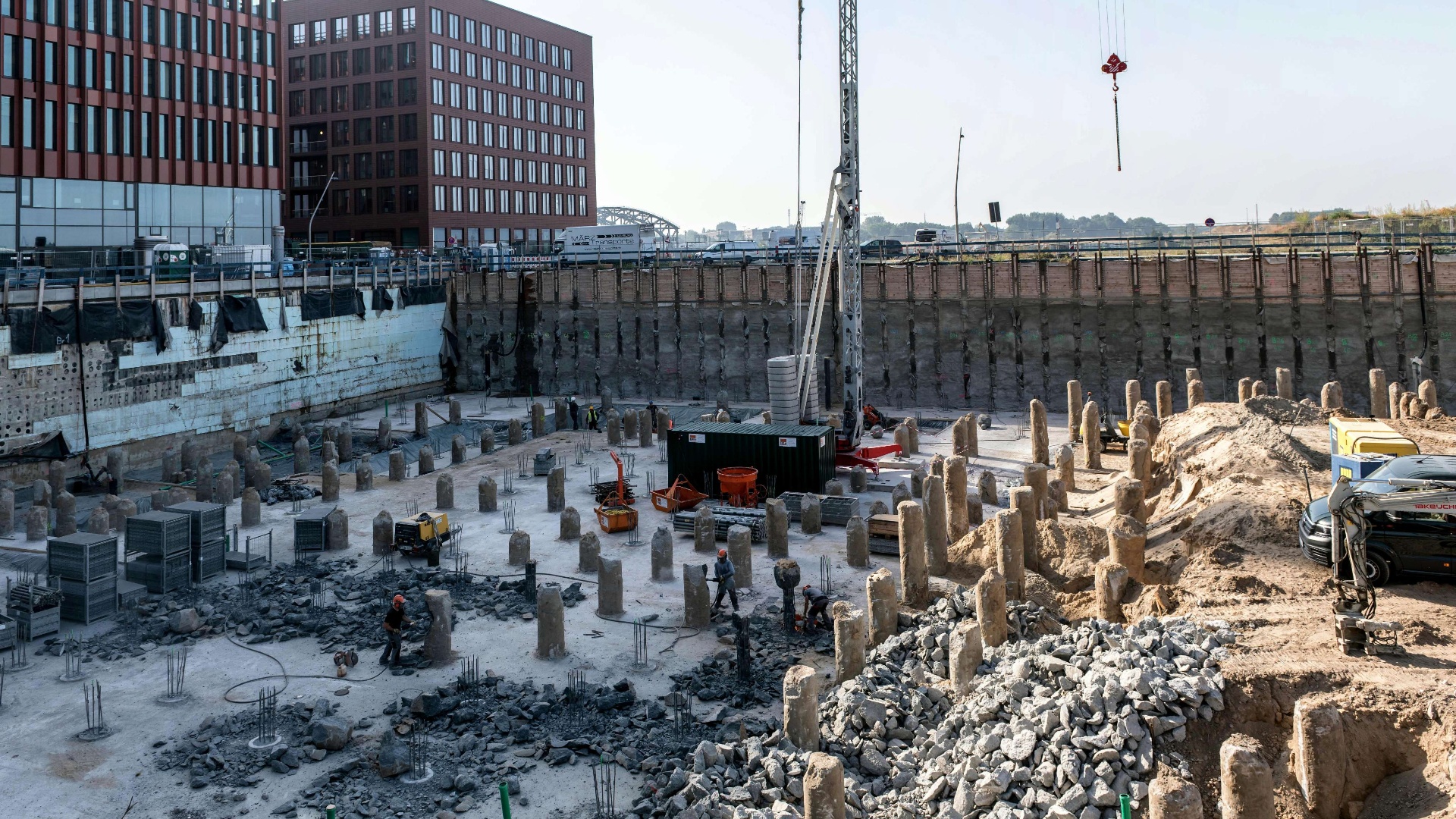
Mini piled underpinning
Small-diameter piles driven or bored to depths well beyond the reach of hand-dug methods, capped with a reinforced beam.
- UK-wide coverage and local knowledge
- 20 year remedial warranty
- Diagnostics to remedial work
What it is
Mini piles are typically 150 to 300mm in diameter and can reach 10 to 15 metres or more. They are installed with compact rigs that fit through standard doorways or side passages. Once the piles are in, a reinforced concrete beam ties them together and picks up the wall.
There are several flavours: bored cast-in-place piles (the most common for residential work), driven steel cased piles, and continuous flight auger (CFA) piles for slightly larger jobs. The choice depends on noise tolerance, headroom, and the soil profile.
Mini piles transfer load through end-bearing on a competent stratum, through skin friction along the pile shaft, or both. The engineer specifies which mechanism is being relied on, and a trial pile is usually load-tested before production starts.
When it's used
Mini piles are the right answer when the bearing layer is genuinely deep (typically beyond five metres), when the building sits on made-up ground or fill where the competent stratum is unknown until probed, when a mature tree close by is drying out clay and is staying, or when vibration must be kept low because of attached neighbours, listed fabric, or sensitive equipment. They are also the only realistic option for many basements and rear extensions reachable only through the house, because compact rigs fit through standard doorways and produce far less spoil than open excavation.
There are several flavours: bored cast-in-place piles (the most common for residential work), driven steel cased piles, and continuous flight auger piles for slightly larger jobs. The choice depends on noise tolerance, headroom, and the soil profile. Internal piling adds floor lifts, dust protection, and reinstatement to the schedule, so the higher cost is only justified if the depth or access genuinely demands it. A trial pile is usually load-tested before production starts, which gives the engineer real numbers to work to instead of conservative assumptions.
How the work runs
-
1. Access plan
Equipment route, spoil removal, and protection of finishes agreed before any drilling.
-
2. Pile installation
Piles bored or driven to the design depth and tested where required.
-
3. Capping beam
Reinforced beam cast across the pile heads to support the wall.
-
4. Reinstatement
Floors, gardens, and external surfaces made good.
Pros and cons
Pros
- Reaches bearing strata far beyond hand-dig methods (10m+)
- Compact rigs work through standard doorways
- Low vibration (good for terraces and listed buildings)
- Real-time confirmation of capacity from torque or load test
- Less spoil than mass concrete or beam and base
Cons
- Higher mobilisation cost
- Specialist contractor required
- Internal work means floor lifting and dust protection
- Slightly longer design and approval phase
How it compares
Every method we offer at a glance.
| Method | Time on site | Reaches | Disruption | Best for |
|---|---|---|---|---|
| Beam and base | 2 to 6 weeks | Up to 4m via deeper bases | High, large pits with significant excavation | Variable ground, bay windows, redistributing loads |
| Foam injection | 1 day for most jobs | Treats soil and slabs to 3m | Minimal, drilled ports only | Slab re-levelling, void fill, conservatory bases |
| Mass concrete | 2 to 6 weeks per elevation | Up to 3m hand-dug | High, open excavation and significant spoil | Shallow failures on traditional ground, insurance claims |
| Mini piled | 1 to 3 weeks on site | 10–15m, sometimes more | Medium, compact rigs and internal floor lifts | Deep bearing layers, made-up ground, restricted access |
| Resin injection | 1 day for most jobs | Treats soil to 3–4m via ports | Minimal, small ports and no spoil | Granular soils, intact foundations, voids and density loss |
| Screw pile | 2 to 5 days | 5–10m typical | Low, no excavation and no concrete cure | Lighter loads, time-critical jobs, conservatories |
Suitability
Copes well with deep bearing layers, made-up ground, sensitive neighbours, restricted access, and heavier loads than screw piles can carry. Struggles with very low headroom (sub-2m, where even compact rigs cannot stand up), tight budgets on shallow problems where mass concrete would do, and sites where the soil profile has not been investigated. The diagnostic question is whether the depth, vibration limits, or access genuinely rule out hand-dig methods. If they do, mini piles are usually the only realistic route.
Common questions
Get a free assessment
A surveyor will be in touch within 48 hours.