
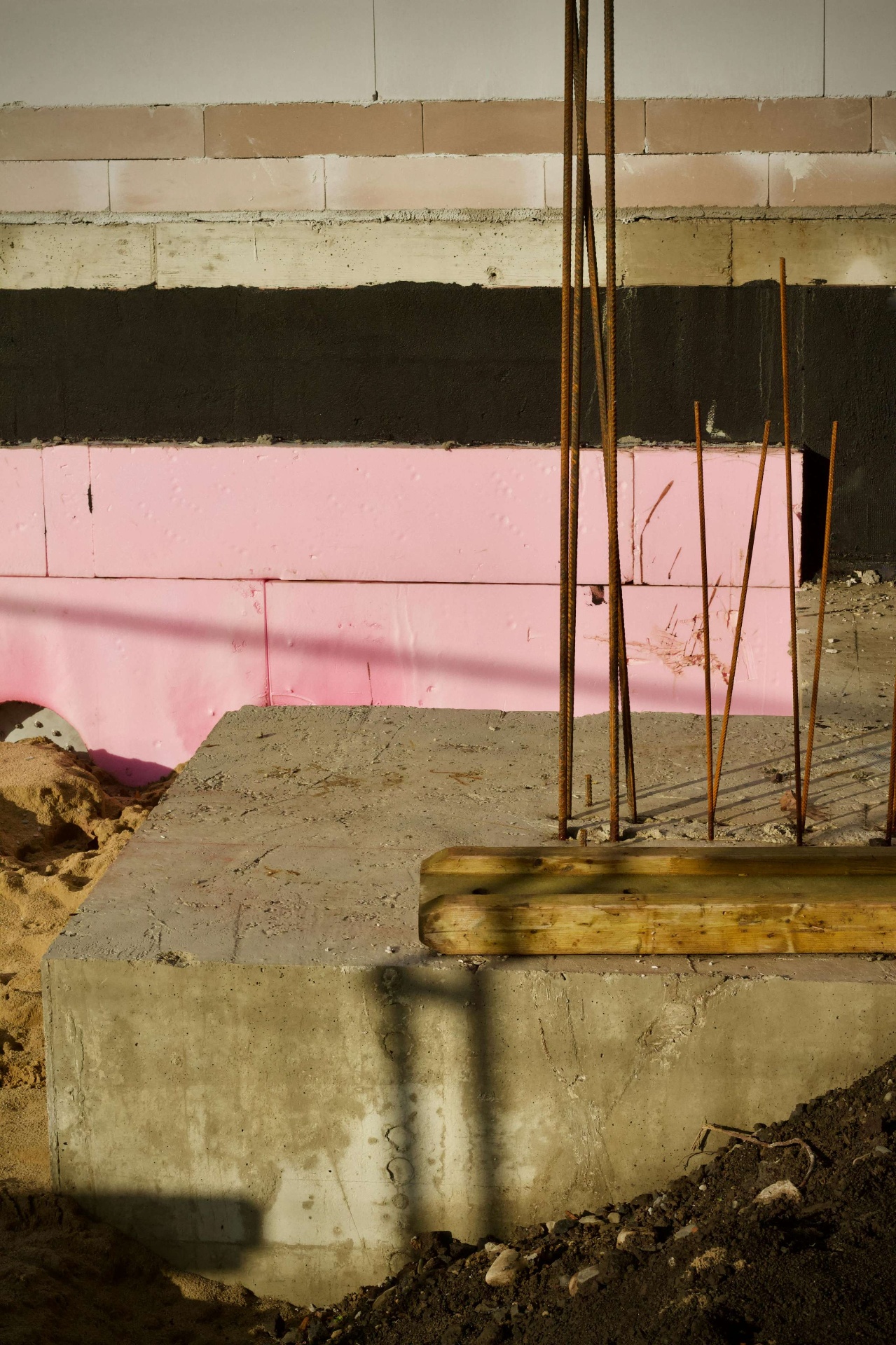
Resin injection underpinning
Structural resin injected through small ports below the foundation. The resin expands, fills voids, and stiffens weak soil.
- UK-wide coverage and local knowledge
- 20 year remedial warranty
- Diagnostics to remedial work
What it is
A two-part polyurethane resin is delivered through narrow tubes pushed beneath the footing. As it reacts it expands, displacing air and water from loose soil, then sets to a defined strength within minutes.
Pressure and lift are monitored at the wall with laser levels. Injection happens in stages, with continuous feedback so the engineer can stop before any unwanted lift occurs. The whole job is dry, no excavation, no spoil, no exposed footings.
Resin systems are tested to BBA certification and used widely across Europe. They are not a magic fix for every subsidence problem, but in the right ground they are genuinely as effective as traditional underpinning at a fraction of the disruption.
When it's used
Resin injection fits shallow subsidence in granular soils where the foundation is structurally sound but the soil beneath it has lost density. The classic trigger is a leaking drain washing fines out from under a strip footing on sandy or silty ground, often discovered after a CCTV survey done for unrelated reasons. It is also the right tool for filling voids beneath foundations after washouts, for stabilising lightly loaded slabs, and for properties where excavation is genuinely impossible: paved courtyards, conservatory floors, internal slabs in occupied homes. The whole job is dry, dust-controlled, and usually finished in a day on site.
Resin treats the soil, not the foundation. If the footing itself has cracked, rotated, or sheared, no amount of resin will rebuild it; the right answer there is mass concrete, beam and base, or piles. Plastic clays (where most UK subsidence actually happens) are a poor fit because resin cannot stop a tree drinking next summer. The two questions worth answering before signing off resin are simple: what is the soil, and is the failure in the foundation or in the ground under it? A trial pit and a soil log give the answer in a day, and it is the cheapest money you will spend on the whole job.
How the work runs
-
1. Ground investigation
Trial pits and probes confirm the depth and nature of the weak layer.
-
2. Injection grid
Ports installed at planned intervals along the affected wall.
-
3. Controlled lift
Resin injected in stages while the wall is monitored for movement.
Pros and cons
Pros
- No excavation, work completes in a single day for most domestic jobs
- Minimal disruption to gardens, driveways, and finishes
- Real-time monitoring of lift and pressure
- Cheaper per metre than traditional methods in suitable ground
- Property remains habitable throughout
Cons
- Not suitable in plastic clays (where most UK subsidence happens)
- Cannot rebuild a failing foundation, only stiffens the soil
- Some loss adjusters still prefer concrete-based solutions
- Requires good ground investigation to specify correctly
How it compares
Every method we offer at a glance.
| Method | Time on site | Reaches | Disruption | Best for |
|---|---|---|---|---|
| Beam and base | 2 to 6 weeks | Up to 4m via deeper bases | High, large pits with significant excavation | Variable ground, bay windows, redistributing loads |
| Foam injection | 1 day for most jobs | Treats soil and slabs to 3m | Minimal, drilled ports only | Slab re-levelling, void fill, conservatory bases |
| Mass concrete | 2 to 6 weeks per elevation | Up to 3m hand-dug | High, open excavation and significant spoil | Shallow failures on traditional ground, insurance claims |
| Mini piled | 1 to 3 weeks on site | 10–15m, sometimes more | Medium, compact rigs and internal floor lifts | Deep bearing layers, made-up ground, restricted access |
| Resin injection | 1 day for most jobs | Treats soil to 3–4m via ports | Minimal, small ports and no spoil | Granular soils, intact foundations, voids and density loss |
| Screw pile | 2 to 5 days | 5–10m typical | Low, no excavation and no concrete cure | Lighter loads, time-critical jobs, conservatories |
Suitability
Copes well with sandy and silty soils that have lost density, with shallow voids beneath foundations, and with slabs needing modest re-levelling. Struggles with plastic clays, deep failures, active heave, and any case where the foundation itself has failed structurally. The diagnostic questions are: is the soil granular enough for the resin to densify it, and is the foundation sound enough to ride on the improved ground? If both answers are yes, resin is genuinely as effective as traditional underpinning at a fraction of the disruption.
Common questions
Get a free assessment
A surveyor will be in touch within 48 hours.